
SOAP notes software for therapists turns a once-manual, error-prone documentation task into a structured, billing-ready workflow that keeps clinicians focused on clients rather than paperwork. For solo providers and growing behavioral health group practices alike, the right system does more than store notes; it connects documentation directly to supervision, scheduling, and claims so nothing falls through the cracks. In this guide, you will learn what SOAP notes software actually does, which features matter most, how pricing typically works, and the mistakes practices should avoid. Consequently, whether you are a solo clinician or scaling toward dozens of providers, this breakdown should help you choose with confidence.
What Is SOAP Notes Software for Therapists?
SOAP notes software for therapists is a digital platform that helps clinicians write, organize, and store Subjective, Objective, Assessment, and Plan notes in a structured format tied to billing and compliance requirements. Most modern systems also connect those notes to scheduling, supervision, and claims rather than treating documentation as an isolated task.
The SOAP format itself is not new; it has been used across medicine for decades as a standardized way to document a patient encounter, as described on Wikipedia's overview of SOAP notes. What has changed is how that format gets produced and used. Instead of a static template in a word processor, dedicated software pulls in client history, flags missing information, and routes a finished note straight into the billing workflow. As a result, a note is no longer just a record of what happened; it becomes a trigger for the next action, whether that is a claim submission or a supervisor's review.
For behavioral health specifically, this matters because notes carry extra weight. They support medical necessity for insurance claims, document supervision for prelicensed clinicians, and create the audit trail regulators expect. Generic documentation tools were not built with those specific demands in mind, which is why purpose-built progress notes software built for behavioral health teams tends to outperform generic alternatives on compliance and claim readiness.
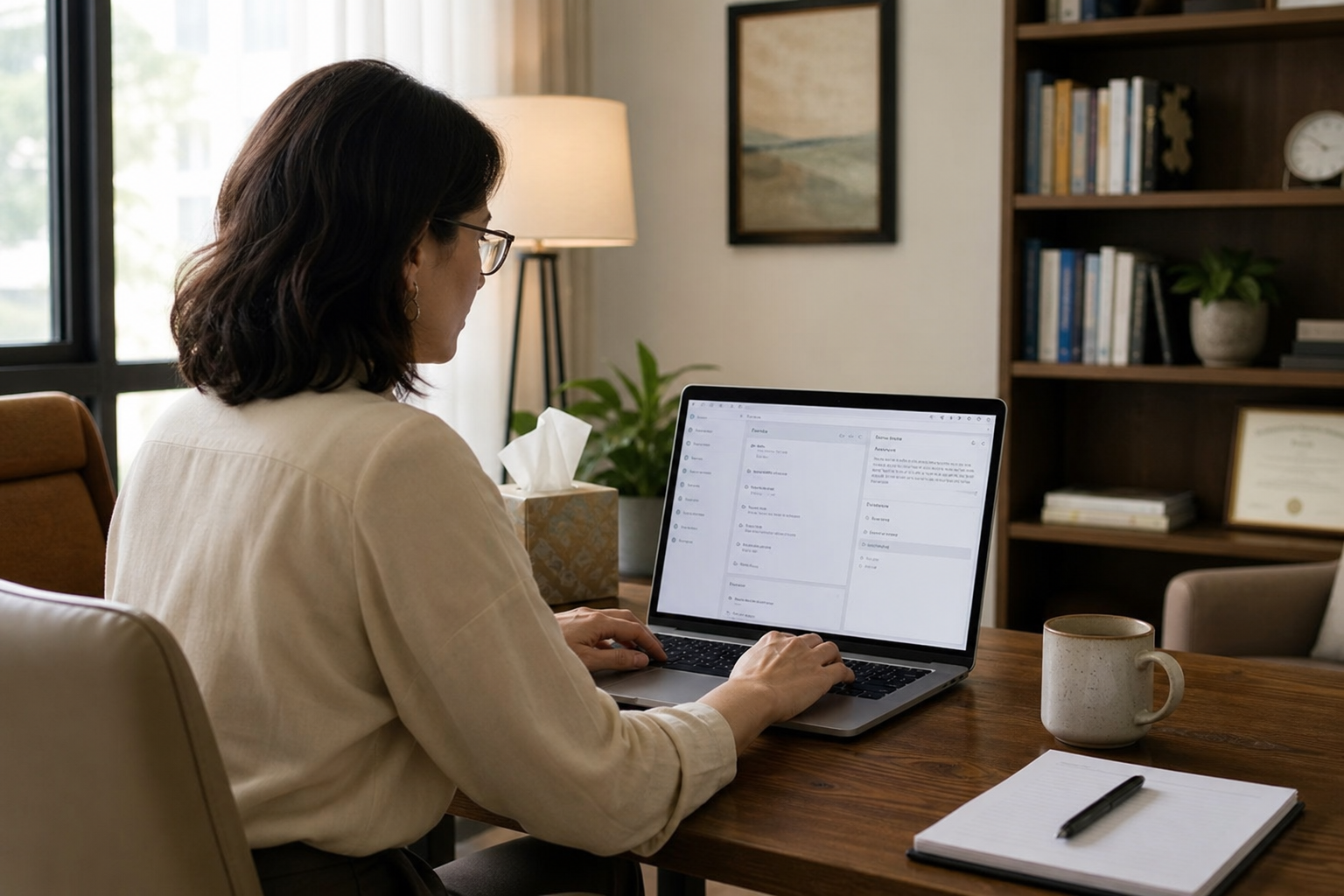
SOAP notes software for therapists helps clinicians document sessions without losing time between appointments.
Why Clinical Documentation Software Matters for Growing Practices
As a practice adds clinicians, documentation stops being a personal habit and becomes an operational risk. Industry research summarized by the American Psychological Association consistently points to administrative burden as a major driver of clinician burnout, with paperwork pulling hours away from direct client care every week. In addition, unsigned or incomplete notes are one of the most common reasons claims stall before they ever reach a payer.
That is precisely the gap TuskaMind was designed to close. Rather than storing finished notes like a filing cabinet, it surfaces unsigned documentation, missing fields, and supervision gaps before they turn into denied claims. Because the platform was shaped inside a live group practice handling dozens of clinicians and roughly 70 to 100 insurance claims per day, its documentation workflows were built around real bottlenecks, not theoretical ones. For practices also managing treatment planning alongside notes, pairing documentation with treatment plan software built for behavioral health practices keeps clinical records consistent from intake through discharge.
Key Features to Look for in Therapy Note-Taking Software
Not every documentation tool is built the same way. Specifically, a handful of features separate systems that genuinely reduce administrative burden from ones that simply digitize a paper form.
- AI-assisted drafting: Tools like an embedded AI scribe can generate a first draft from session content, suggest CPT codes, and flag missing fields before a note is signed.
- Billing-ready templates: Notes should map directly to the codes and payer requirements behind a claim, reducing the back-and-forth between clinical and billing staff.
- Supervision and co-signature: For prelicensed clinicians, the software should support review, co-signature, and board-ready supervision hour tracking.
- Telehealth compatibility: Documentation should work just as smoothly for virtual sessions as in-person ones, with video and notes living in one place.
- Real-time alerts: Owners and administrators benefit from dashboards that flag unsigned notes or stalled documentation before they hold up revenue.
Practices running telehealth-heavy caseloads, including family and couples work, should also confirm documentation integrates cleanly with video sessions; this complete guide to telehealth software for family therapy breaks down what to look for there.
How to Choose SOAP Notes Software for Your Practice
Choosing the right platform is easier when broken into a clear sequence rather than evaluated all at once. The following steps outline a practical order of operations.
- List your required documentation types. Identify every note type your practice needs, including SOAP notes, treatment plans, and supervision records, so you can confirm full support before committing.
- Check billing and claims integration. Verify finished notes connect directly to claim creation and CPT code suggestions, since disconnected systems are a leading cause of denied claims.
- Confirm compliance and security safeguards. Ask vendors for a signed business associate agreement, audit trail capabilities, and encryption details to protect client data.
- Test supervision and collaboration workflows. If your practice employs prelicensed clinicians, confirm the platform supports co-signature and board-ready supervision records before relying on it daily.
- Pilot the system with real caseloads. Run a short pilot with a small group of clinicians handling actual sessions to confirm the workflow genuinely saves time.
Practices already using TuskaMind for scheduling often find the transition smoother, since documentation, calendars, and claims already share one data layer. For more detail on that connection, see how TuskaMind integrates scheduling with clinical documentation.

Strong SOAP notes software supports supervision review alongside everyday clinical documentation.
SOAP Notes Software vs. Generic EHR Templates
It is tempting to assume any electronic health record will handle documentation well enough. However, generic systems, particularly those built for general medicine, often lack behavioral-health-specific logic around supervision, session types, and payer rules.
| Capability | Generic EHR Template | Dedicated SOAP Notes Software |
|---|---|---|
| Billing-ready formatting | Often manual mapping required | Built-in CPT code suggestions |
| Supervision co-signature | Rarely included | Built for prelicensed clinician review |
| Proactive alerts | Limited or none | Flags unsigned notes before claims stall |
Pricing and Implementation for Behavioral Health Documentation Platforms
Pricing for behavioral health documentation platforms generally depends on per-clinician licensing, whether revenue cycle management is bundled in, and how much onboarding support a practice needs. Solo clinicians typically pay less since they only need core documentation and scheduling, whereas group practices often need supervision tracking, multi-location dashboards, and role-based access, which adds to the cost.
Implementation timelines vary too. A solo provider can often be live within days, while a group practice migrating historical records and training a full team may need several weeks. For this reason, white-glove onboarding, migration assistance, and revenue-cycle health reviews, the kind offered through TuskaMind's implementation services, can meaningfully shorten that runway. Practices that want hands-on onboarding and preferred pricing can also explore TuskaMind's Pilot Partner Program for early access.
Common Mistakes When Choosing Progress Note Software for Clinicians
Even well-intentioned practices make avoidable mistakes during selection. In particular, three issues come up repeatedly.
- Choosing a general medical EHR that was never designed for behavioral health workflows, supervision, or payer nuances.
- Overlooking supervision tracking, which later forces prelicensed clinicians and supervisors back into spreadsheets.
- Underestimating how documentation delays ripple into billing, since an unsigned note can hold up an entire claim.
Practices scaling supervision across multiple associate-level clinicians may find it useful to review this clinical supervision management software guide before finalizing a documentation decision, since the two workflows are closely linked. Security also deserves attention; the U.S. Department of Health and Human Services outlines baseline expectations in its HIPAA guidance, and any vendor handling client notes should meet those standards without exception.
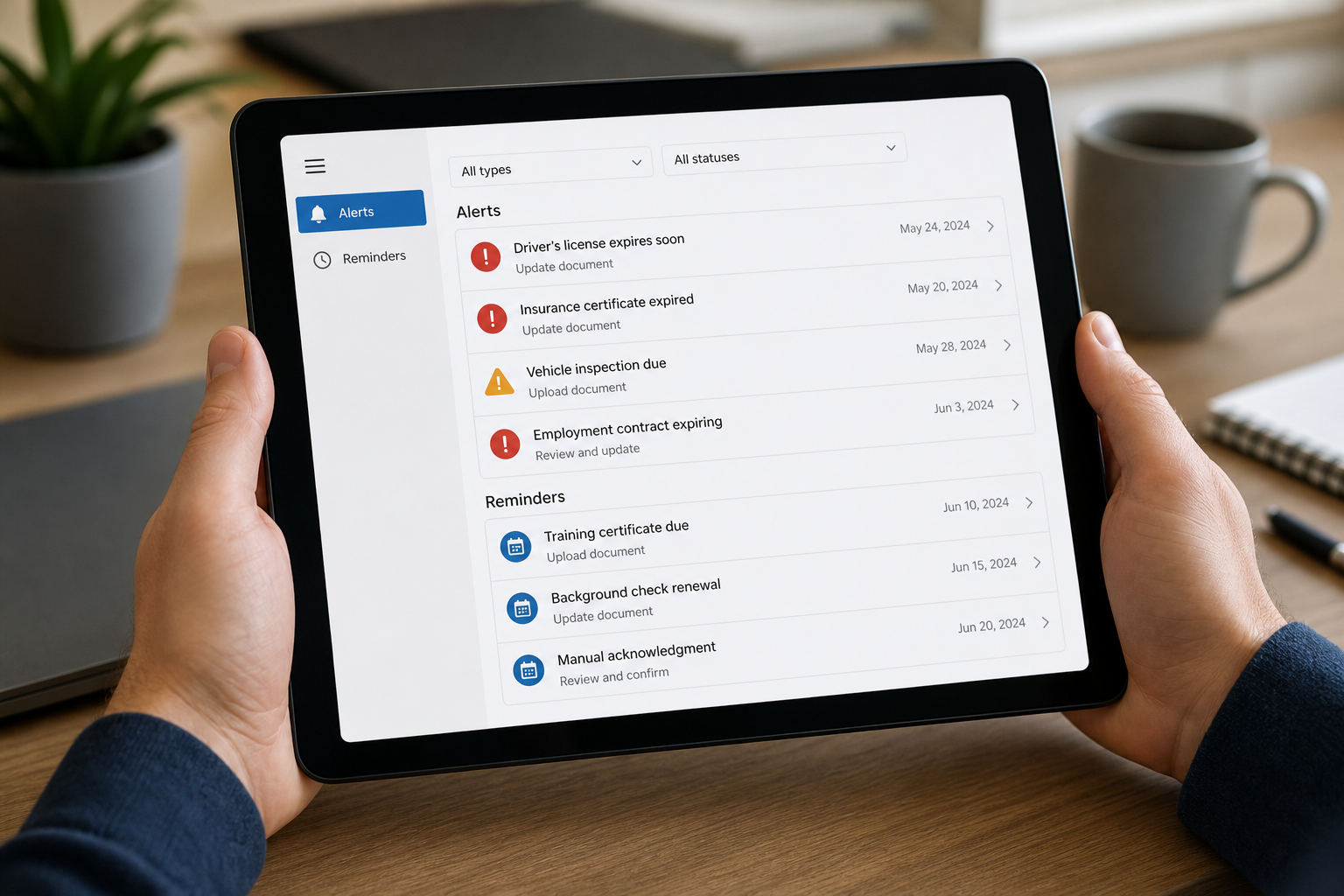
Real-time alerts help practice owners catch documentation gaps before they delay billing.
Frequently Asked Questions About SOAP Notes Software for Therapists
What is SOAP notes software for therapists?
SOAP notes software for therapists is a digital platform that structures clinical documentation into Subjective, Objective, Assessment, and Plan sections, then ties those notes directly to billing and compliance. It replaces paper forms or generic word processors with a format built for behavioral health care.
How does SOAP notes software save time for therapists?
It saves time through pre-built templates, auto-filled client data, and AI-assisted drafting, so clinicians are not starting from a blank page after every session. Many platforms also flag missing fields before a note can hold up billing.
Is SOAP notes software for therapists HIPAA compliant?
Reputable SOAP notes software is built with HIPAA and HITECH safeguards, including audit trails, encryption, and signed business associate agreements. Always confirm a vendor provides a BAA before storing client information.
How much does SOAP notes software for therapists cost?
Pricing typically depends on per-clinician licensing, whether billing tools are bundled in, and overall practice size. Group practices needing supervision tracking and multi-location dashboards usually pay more than solo providers.
Can SOAP notes software integrate with billing and claims?
Yes, well-designed platforms connect finished, signed notes directly to claim creation so billing staff are not re-entering data. This reduces denials caused by mismatches between the note and the submitted claim.
What's the difference between SOAP notes software and progress notes software?
SOAP notes software focuses specifically on the Subjective, Objective, Assessment, Plan structure, while progress notes software can cover broader formats including DAP or narrative notes. Many behavioral health platforms support both within one system.
How long does it take to implement SOAP notes software for a practice?
Solo clinicians can often be set up within a few days, while group practices migrating historical records may need two to six weeks. White-glove onboarding can shorten that timeline considerably.
What common mistakes do practices make when choosing SOAP notes software?
The most common mistakes are picking a generic medical EHR, ignoring supervision workflows for prelicensed clinicians, and underestimating how documentation delays affect claim timelines.
Does SOAP notes software support clinical supervision?
Some platforms include supervision-specific tools like co-signature workflows, hour tracking, and board-ready records. This matters most for growing group practices supervising multiple associate-level staff.
Can SOAP notes software work for telehealth sessions?
Yes, many platforms pair SOAP documentation with HIPAA-compliant video so clinicians can chart during or right after a virtual session, keeping telehealth notes just as timely as in-person ones.
What features should SOAP notes software for therapists include?
Look for structured templates tied to billing codes, AI-assisted drafting, missing-field alerts, supervision co-signature, and audit-ready compliance logging. Scheduling and client portal integration help as a practice grows.
Is AI-assisted SOAP note writing accurate for clinical use?
AI drafting tools can accurately summarize session content and suggest CPT codes, but clinicians should always review and finalize notes before signing. The clinician remains responsible for clinical accuracy.
Can group practices use SOAP notes software across multiple clinicians?
Yes, enterprise-ready platforms support role-based access, multi-clinician scheduling, and centralized dashboards so owners can see documentation status across an entire team without chasing individual staff.
Final Thoughts on Choosing SOAP Notes Software for Therapists
Ultimately, SOAP notes software for therapists should do more than store what already happened in a session. The strongest systems connect documentation to supervision, billing, and compliance so owners and clinicians see what needs attention before it becomes a denied claim or a missed deadline. Whether you are a solo clinician comparing a few tools or a group practice ready to replace a patchwork of spreadsheets, start by listing your documentation needs, testing billing integration, and confirming compliance safeguards before committing. Platforms like TuskaMind, built by a practicing clinician and practice owner, show what is possible when documentation, supervision, and revenue cycle management share one system instead of three.

