Progress notes software behavioral health practices rely on should do more than store clinical notes in a digital filing cabinet. It should save clinicians time, keep documentation audit-ready, and connect directly to billing so claims do not stall. In fact, many group practices discover too late that a tool built for general medicine cannot handle therapy-specific needs like treatment plan linkage, supervisor co-signatures, or payer-specific note formats. This guide walks through what progress notes software actually does, which features matter most for insurance-based behavioral health practices, and how the right platform turns documentation from a daily headache into a source of clarity. Along the way, we reference TuskaMind, a behavioral health operating system built by a practice owner who lived these problems firsthand.
Quick answer: Progress notes software behavioral health practices need is clinical documentation software that structures SOAP or DAP notes, links them to treatment plans and diagnosis codes, supports supervisor co-signature, and hands off a completed note directly into the billing workflow.
What Is Progress Notes Software for Behavioral Health?
Progress notes software behavioral health is the category of clinical documentation tools built specifically for therapy, counseling, and psychiatric practices. Rather than treating a note as a static record, it treats each note as a step in a larger process that includes treatment planning, supervision, and claim submission. As a result, a finished note does not just sit in a chart; it moves the client's care and the practice's revenue forward.
Unlike general medical electronic health records, behavioral health documentation software understands SOAP note and DAP note structures, diagnosis-driven treatment plans, and session types such as individual, family, couples, and group therapy. Consequently, clinicians spend less time reformatting notes to fit a system that was never designed for mental health care in the first place.

Progress notes software behavioral health clinicians use daily to document sessions and support billing accuracy.
Why Documentation Burden Hurts Insurance-Based Practices
Documentation delays are not just a clinician problem; they are a revenue problem. For example, a note that sits unsigned for a week can hold up an entire claim, which in turn delays payment and strains cash flow. In particular, insurance-based group practices that handle dozens of claims per day feel this pressure most acutely.
A widely cited 2016 time-and-motion study published in the Annals of Internal Medicine found that clinicians spent nearly two hours on desk and documentation work for every hour of direct patient time. While that study focused on ambulatory medicine, behavioral health clinicians report a similar pattern, especially when notes, billing, and supervision live in separate systems. Therefore, reducing documentation friction has a direct effect on both clinician wellbeing and claim turnaround.
TuskaMind was shaped inside a live Colorado group practice handling roughly 70 to 100 insurance claims per day across as many as 50 clinicians and contractors. That volume made it clear that documentation and billing could not be treated as separate problems solved by separate tools.
Key Features of Progress Notes Software Behavioral Health Teams Need
Not every documentation tool is built the same way. Above all, progress notes software behavioral health teams need should combine structured clinical content with workflow automation, rather than functioning as a simple text box attached to a calendar.
SOAP Notes, Treatment Plans, and Template Libraries
A strong platform offers ready-made SOAP and DAP templates tied directly to each client's treatment plan. As a result, clinicians are not retyping diagnosis information or goals into every note; the system pulls that context forward automatically.
AI-Assisted Note Drafting and CPT Suggestions
Embedded AI assistants, such as TuskaMind's Nellie AI, can draft note language from a session summary, suggest appropriate CPT codes, and flag missing fields before a note is finalized. Consequently, clinicians catch billing errors before a claim is ever submitted, not after a denial arrives weeks later.
Feature checklist: behavioral health-specific templates, supervisor co-signature, diagnosis-linked billing codes, telehealth integration, audit trails, and real-time alerts for unsigned notes.
How Clinical Documentation Software Connects to Billing and RCM
A finished progress note should not be the end of the workflow; it should be the trigger for the next step. Specifically, when documentation software is connected to revenue cycle management, a signed note can move directly into claim creation, reducing the manual handoffs that cause delays.
TuskaMind handles the full claims lifecycle in one place, including claim creation, submission, rejection and denial management, aging accounts receivable, ERA reconciliation, and payment posting. In addition, practices with prelicensed clinicians can manage supervisory billing in the same system, so a note is not considered billing-ready until supervision requirements are satisfied. You can review the full breakdown of these capabilities on the TuskaMind features page.
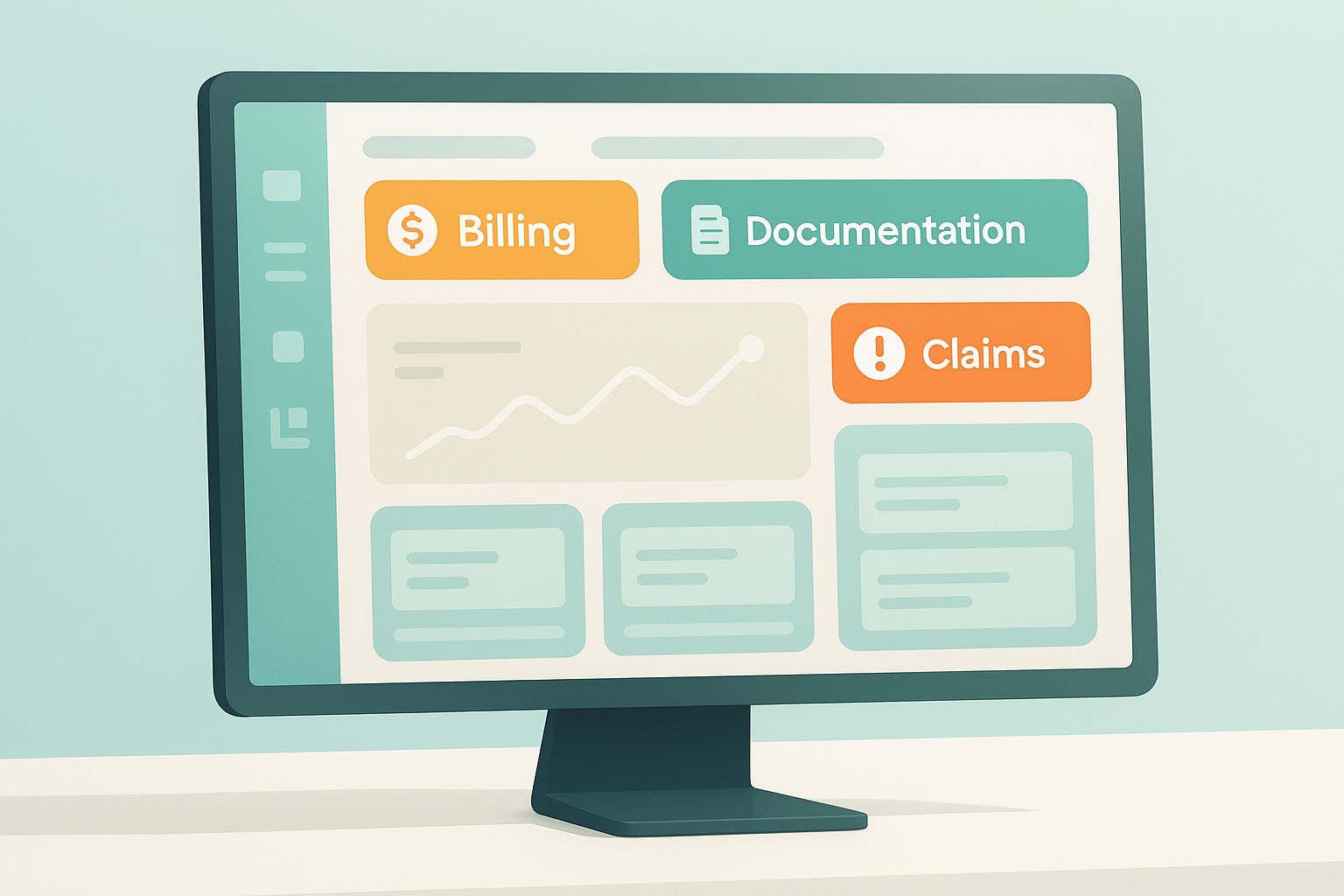
A practice-wide dashboard flags unsigned notes and claim issues before they affect revenue.
Step-by-Step: Rolling Out New Progress Note Software in Your Practice
Switching systems can feel disruptive, but a structured rollout keeps care and billing moving. Below is a practical sequence many group practices follow.
- Audit your current documentation workflow. Review existing templates, identify bottlenecks in signing and submission, and document which supervision rules apply to prelicensed staff.
- Migrate client records and templates. Import active client demographics, treatment plans, and historical notes while preserving data security and accurate matching.
- Configure templates and supervision rules. Set up SOAP or DAP templates, assign co-signature requirements, and map diagnosis codes to billing fields.
- Train clinicians and administrative staff. Run hands-on sessions covering note entry, electronic signatures, and the handoff into the billing workflow.
- Monitor compliance dashboards weekly. Track unsigned notes, overdue supervision reviews, and documentation gaps that could delay claims.
Progress Notes and Clinical Supervision: Why They Must Work Together
For practices employing prelicensed clinicians, a progress note is not finished until a supervisor reviews and co-signs it. However, many general EHR systems treat supervision as an afterthought, forcing supervisors to track hours in a separate spreadsheet.
TuskaMind was built around this exact gap, since its founder is a licensed clinical supervisor herself. The platform tracks supervision hours state by state, routes notes for review and co-signature, and keeps board-ready supervision records alongside the clinical documentation itself. This matters because a missed supervision step can quietly block billing for an entire caseload.

Supervision and documentation stay connected so co-signatures never hold up billing unnecessarily.
Choosing the Right Behavioral Health EHR and Notes Platform
When comparing vendors, it helps to look beyond note templates alone. In particular, ask how the platform handles supervision, insurance eligibility checks, client balances, and compliance alerts, since these are the areas where fragmented systems tend to fail practices as they grow.
TuskaMind is built primarily for solo clinicians and, above all, insurance-based behavioral health group practices that have outgrown spreadsheets and disconnected tools. Its security architecture is detailed on the TuskaMind security page, which covers HIPAA and HITECH alignment, audit trails, and business associate agreements. Practices exploring early access can also review the Pilot Partner Program, which offers preferred pricing and hands-on onboarding.
For federal guidance on how patient health information must be protected, the U.S. Department of Health and Human Services HIPAA resource is a useful reference point when evaluating any vendor's compliance claims.
Frequently Asked Questions About Progress Notes Software Behavioral Health
What is progress notes software for behavioral health?
Progress notes software behavioral health practices use is a clinical documentation system built for therapy, counseling, and psychiatric care. It structures SOAP or DAP notes, links them to treatment plans, and connects finished notes to billing.
How is progress notes software different from a general EHR?
A general medical EHR is built around physical exams and medication orders, while behavioral health documentation software is built around treatment plans, session formats, and supervision requirements. General systems often lack supervisor co-signature workflows or mental health-specific coding support.
How long does it take to write a progress note with software versus by hand?
With templates and AI-assisted drafting, many clinicians finish a note in five to ten minutes instead of twenty or more. Time savings vary depending on note complexity and how well templates are configured.
What should a behavioral health progress note include?
A complete note typically covers presenting concerns, interventions used, client response, risk assessment, and a plan for the next session. It should also link back to the diagnosis and treatment plan to support accurate billing.
Can progress notes software help with insurance claims?
Yes, when documentation software is connected to revenue cycle management, a completed note can trigger claim creation automatically. This reduces delays caused by unsigned or incomplete notes sitting in a queue.
Is progress notes software HIPAA compliant?
Reputable platforms are built on HIPAA and HITECH-aligned architecture, including encryption, audit trails, and signed business associate agreements. Even so, practices should confirm a vendor's specific compliance documentation before signing on.
How much does behavioral health documentation software cost?
Pricing varies widely based on clinician count, included billing services, and feature depth, ranging from per-clinician monthly fees to bundled practice plans. Many vendors, including pilot programs, let practices test fit before committing long term.
What is the difference between a SOAP note and a DAP note?
SOAP notes organize information into Subjective, Objective, Assessment, and Plan sections, while DAP notes combine subjective and objective data into one Data section. Both formats are commonly supported in behavioral health documentation software.
Can supervisors co-sign notes in progress notes software?
Yes, most platforms built for behavioral health include supervisor review and electronic co-signature workflows for prelicensed clinicians. This creates board-ready supervision records alongside the clinical note itself.
What common mistakes do practices make when choosing documentation software?
Common mistakes include selecting a general medical EHR without behavioral health workflows, ignoring billing integration, and skipping staff training during rollout. These gaps often resurface later as denied claims or supervision backlogs.
How does AI help with progress note writing?
AI assistants can draft note language from session summaries, suggest CPT codes, and flag missing fields before submission. As a result, documentation time shortens while billing errors are caught earlier in the process.
How do I switch from paper notes or spreadsheets to software?
Start by auditing current templates, migrating active client records, and configuring note templates before training staff. A phased rollout with vendor onboarding support reduces disruption to ongoing client care.
Final Thoughts
Choosing progress notes software behavioral health practices can depend on comes down to one question: does it show you what needs attention, or does it just store what already happened? Specifically, the right platform links documentation to supervision and billing, so a finished note moves care and revenue forward instead of sitting in a chart. Therefore, practices evaluating new tools should prioritize behavioral health-specific templates, supervisor workflows, and direct billing integration over generic feature lists. To see how these pieces fit together in practice, visit TuskaMind or reach out through the contact page to ask questions about fit for your practice.