
Board certification supervision tracking is the backbone of every prelicensed clinician's path toward full licensure, and getting it wrong can stall a career for months. For group practice owners, it is also one of the quietest operational risks in behavioral health. However, when supervision hours, notes, and sign-offs live in spreadsheets or binders, mistakes slip through until a board application exposes them.
This guide walks through what board certification supervision tracking actually involves, why it matters for both clinicians and practice owners, and how to build a system that holds up under audit. Along the way, we will reference real state and federal resources, including the National Board for Certified Counselors, so you can see how these requirements play out in practice.
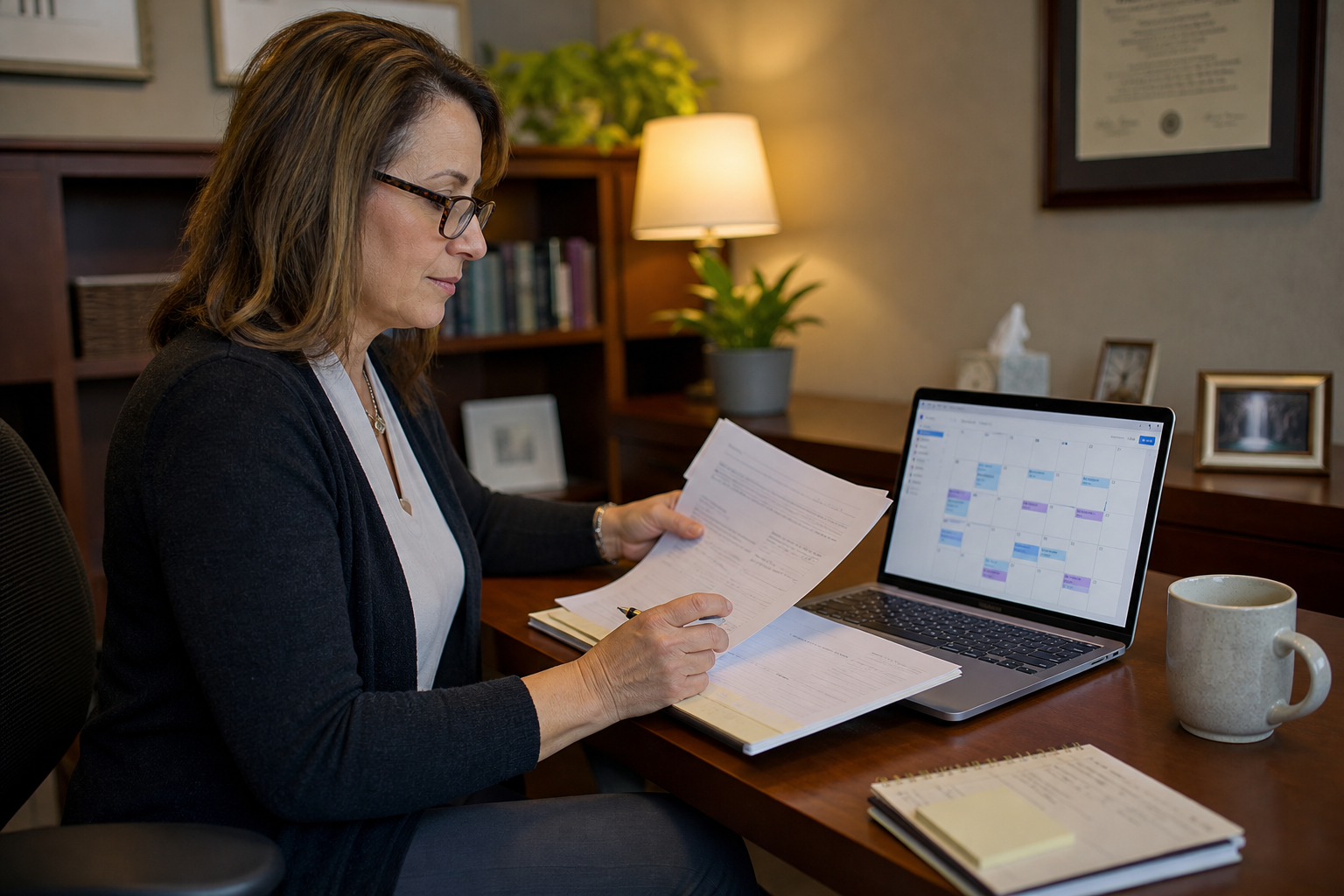
Accurate board certification supervision tracking starts with organized, dated records.
What Is Board Certification Supervision Tracking?
Board certification supervision tracking is the ongoing process of logging supervised clinical hours, documenting supervisor sign-offs, and organizing records so a licensing board can verify a clinician's readiness for certification. In short, it turns scattered supervision notes into a defensible, board-ready file.
For prelicensed clinicians, this tracking usually includes individual supervision hours, group supervision hours, dates, topics discussed, and a signature confirming the session occurred. Meanwhile, for group practice owners, tracking extends further: knowing which supervisors are assigned to which clinicians, how many hours remain, and whether documentation is current across an entire team.
Why Supervision Hour Tracking Matters for Board Certification
Licensing boards exist to confirm clinicians are prepared to practice independently. As a result, boards typically require a set number of supervised hours before a clinician can sit for an exam or apply for full licensure. The National Board for Certified Counselors notes that national certification pathways often require a combination of post-degree supervised experience and documented supervision hours, which underscores how central accurate tracking is to the entire process.
Consequently, when supervision hour tracking is inconsistent, clinicians risk having hours disqualified, delaying licensure by months. For a group practice, that delay can also mean lost billable capacity, since many payers will not credential a clinician until licensure is confirmed. In contrast, practices that track hours in real time rarely face these surprises.
Key Components of a Board-Ready Supervision Tracking System
A reliable system needs more than a running tally of hours. Specifically, it should capture:
- Hour type: individual versus group supervision, since boards usually cap how much group time counts.
- Supervisor credentials: confirmation that the supervising clinician meets board qualifications.
- Session dates and topics: a brief record of what was discussed, not just that a meeting happened.
- Co-signature or attestation: a signed confirmation from the supervisor tied to each entry.
- State-specific thresholds: because requirements differ, as detailed in this state-by-state clinical supervision tracking guide.
Furthermore, these components only help if they live in one place. A practice juggling five spreadsheets for five supervisors is still fragmented, even if each spreadsheet is accurate on its own.

Group supervision sessions require the same careful documentation as individual meetings.
How to Build a Board Certification Supervision Tracking Workflow
Building a dependable workflow does not require a complete overhaul overnight. Instead, practices can follow a clear sequence to move from scattered records to a centralized, audit-ready system.
- Audit current supervision records. Gather every existing log, spreadsheet, and signed note so you can identify missing hours or inconsistent formats before building anything new.
- Map state and board specific requirements. Document the exact hour thresholds, supervisor qualifications, and sign-off formats each board requires for your prelicensed staff.
- Centralize hour logging and documentation. Move all entries into one shared system so supervisors, clinicians, and administrators see the same information at the same time.
- Set up automated alerts for milestones. Configure notifications for approaching hour thresholds, unsigned notes, or sessions that have gone unscheduled too long.
- Prepare board-ready export packets. Generate dated reports with supervisor attestations so clinicians can submit complete documentation whenever a board requests it.
Notably, platforms built specifically for this purpose can shorten this process considerably. Resources like this supervision hour tracking software guide walk through what to look for before switching systems.
Common Mistakes in Supervision Documentation
Even well-intentioned practices make predictable errors. For instance, clinicians often log hours weeks after sessions occur, relying on memory instead of real-time entries. Similarly, group and individual hours sometimes get mixed together, which causes problems when a board caps how much group time counts toward total requirements.
Another frequent issue involves supervisor turnover. When a supervisor leaves the practice, their unsigned notes can become difficult or impossible to retroactively approve. Therefore, practices should require same-week sign-offs rather than allowing a backlog to build. According to Colorado's Department of Regulatory Agencies, incomplete supervision documentation is among the most common reasons licensure applications face delays, which reinforces why consistent tracking matters from day one.
Choosing Supervision Tracking Software for Your Practice
When evaluating software, practices should prioritize tools that handle state-specific thresholds automatically rather than relying on manual rules. In addition, co-signature workflows, real-time alerts, and exportable reports matter more than flashy dashboards. A detailed breakdown of these criteria appears in this clinical supervision management software guide.
TuskaMind, for example, was built inside a live Colorado group practice supporting roughly 50 clinicians and contractors, which shaped how its supervision tracking connects directly to documentation and billing. Because the platform grew out of real operational pain points rather than generic healthcare software, it addresses state-by-state hour tracking, co-signature workflows, and practice-wide alerts in one place, as explained in this overview of tracking supervision hours by state. Practices evaluating broader operational needs can also review this insurance-based behavioral health software guide or visit tuskamind.com directly to see how supervision tracking fits into a full practice operating system.
Direct answer: Board certification supervision tracking means logging supervised hours, supervisor sign-offs, and session details in a centralized, auditable format so licensing boards can verify a clinician's readiness for certification. Practices that centralize this process avoid delayed licensure, lost billing capacity, and compliance gaps.

Centralized entry reduces errors common in manual supervision logs.
Frequently Asked Questions About Board Certification Supervision Tracking
What is board certification supervision tracking?
Board certification supervision tracking is the process of logging, documenting, and reporting supervised clinical hours so prelicensed clinicians can meet licensing board requirements. It typically covers individual and group supervision hours, supervisor sign-offs, and progress toward certification or full licensure.
How does supervision hour tracking support board certification?
Supervision hour tracking creates a running, verifiable record that boards can review when a clinician applies for certification or licensure. Without accurate tracking, clinicians risk delays or denied applications due to incomplete documentation.
Why do licensing boards require supervised hours?
Licensing boards require supervised hours to confirm that prelicensed clinicians have practiced under qualified oversight before working independently. This protects clients and ensures new clinicians develop sound clinical judgment before full licensure.
What is the difference between individual and group supervision for board certification?
Individual supervision is one-on-one time with a qualified supervisor, while group supervision involves multiple supervisees meeting together. Most boards cap how many group hours can count toward total required supervision, so accurate tracking by type matters.
How much does supervision tracking software cost?
Costs vary widely depending on whether the software is a standalone tool or part of a full behavioral health EHR platform. Practices often find bundled platforms more cost-effective since they avoid paying separately for billing, documentation, and supervision tools.
How long does it take to complete board certification supervision hours?
Timelines depend on the state and credential, but many clinicians need one to three years of supervised practice to meet requirements. Consistent, organized tracking helps clinicians avoid unnecessary delays caused by missing or disputed hours.
What are common mistakes clinicians make when tracking supervision hours?
Common mistakes include logging hours inconsistently, mixing individual and group hours without separating them, and losing supervisor signatures over time. These errors often surface only when a clinician applies for licensure, causing avoidable delays.
What documentation do boards require for supervision sign-off?
Most boards require dated logs showing hours, supervision type, topics covered, and a supervisor's signature or electronic attestation. Some boards also require periodic evaluations documenting the supervisee's clinical progress.
Can supervision hours transfer between states?
Supervision hours do not always transfer directly between states because requirements differ in format, supervisor qualifications, and documentation. Clinicians moving states should verify requirements early and keep detailed, exportable records to minimize gaps.
What happens if supervision hours are not properly documented?
Undocumented or poorly documented hours may not count toward licensure, forcing clinicians to repeat supervision time. In group practices, this can also create liability exposure if a board later questions whether oversight actually occurred.
How does TuskaMind support board certification supervision tracking for group practices?
TuskaMind centralizes supervision hour logging, note co-signature, and state-by-state requirement tracking inside one behavioral health operating system. Owners and supervisors get real-time alerts when hours, signatures, or documentation fall behind schedule.
What qualifications must a clinical supervisor hold?
Qualifications vary by state and discipline, but supervisors generally must hold full licensure plus a specific number of years in practice or a supervisory credential. Practices should confirm each supervisor meets current board standards before hours begin accruing.
How often should supervision hours be logged?
Supervision hours should be logged after each session rather than reconstructed from memory weeks later. Real-time logging reduces errors and keeps records aligned with what supervisors actually remember and can verify.
Is electronic supervision tracking accepted by licensing boards?
Most boards accept electronic records as long as they include the same required fields as paper logs, such as dates, hour types, and supervisor attestation. Clinicians should confirm their specific board's format preferences before relying solely on digital records.
What should a practice look for in supervision tracking software?
Practices should look for state-specific hour requirements, automated alerts for missing sign-offs, co-signature workflows, and exportable board-ready reports. Software that connects supervision data to documentation and billing reduces duplicate data entry across teams.
Key Takeaways
Ultimately, board certification supervision tracking is not a box to check once a year; it is an ongoing discipline that protects clinicians and practices alike. As shown above, the boards referenced by sources like the National Board for Certified Counselors and state regulators expect consistent, verifiable records, not reconstructed memories.
In the end, practices that centralize hour logging, automate alerts, and keep supervisor sign-offs current avoid the delays and liability that come from fragmented tracking. Whether a practice manages five prelicensed clinicians or fifty, treating board certification supervision tracking as a daily workflow rather than a year-end scramble pays off when licensure applications, payer credentialing, or board audits arrive unexpectedly.

