Supervision hour tracking software is quickly becoming a necessity for behavioral health group practices that train and employ prelicensed clinicians. Keeping an accurate log of individual, group, and triadic supervision hours used to mean spreadsheets, sticky notes, and a supervisor's memory. However, state licensing boards now expect clean, auditable records, and insurance payers expect documentation that lines up exactly with billed services. This article explains what supervision hour tracking software does, why it matters for growing practices, and how to evaluate a platform, including TuskaMind, before you commit to one.
Quick answer: Supervision hour tracking software is a digital system that logs supervised clinical hours by type, ties them to state licensing board requirements, and produces documentation that supervisors and prelicensed clinicians can submit without manual reconstruction.

Supervision hour tracking software gives supervisors a real-time view of supervisee progress instead of a stack of paper logs.
What Is Supervision Hour Tracking Software?
Supervision hour tracking software is a digital system that logs supervised clinical hours, ties them to board-specific requirements, and produces documentation supervisors and licensing boards can rely on. It replaces manual hour logs and scattered spreadsheets with a single, auditable record tied to real session and co-signature data.
In plain terms, a prelicensed clinician, meaning someone who holds a provisional or associate license such as an LPCA, LMFTA, or LSW, must accumulate a set number of supervised hours before they can sit for full licensure. Those hours are not just a formality. State boards, along with organizations like the National Board for Certified Counselors, require detailed proof of session type, duration, and supervisor sign-off. Without software, that proof lives in whatever system the supervisor happens to use that week.
Why Clinical Supervision Tracking Matters for Growing Practices
As a practice adds clinicians, clinical supervision tracking stops being a side task and becomes a core operational function. For example, a practice supervising even five prelicensed clinicians may need to track hundreds of individual and group sessions each quarter, each tied to a different state's rules.
This matters more now than ever. According to the U.S. Bureau of Labor Statistics, employment of substance abuse, behavioral disorder, and mental health counselors was projected to grow much faster than average, which means more supervisees entering practices and more hours to track accurately. Consequently, practices that rely on manual methods face a growing administrative burden just as demand for supervision is rising. For a deeper look at how requirements shift by jurisdiction, our state-by-state clinical supervision tracking guide breaks down the differences practice owners run into most.
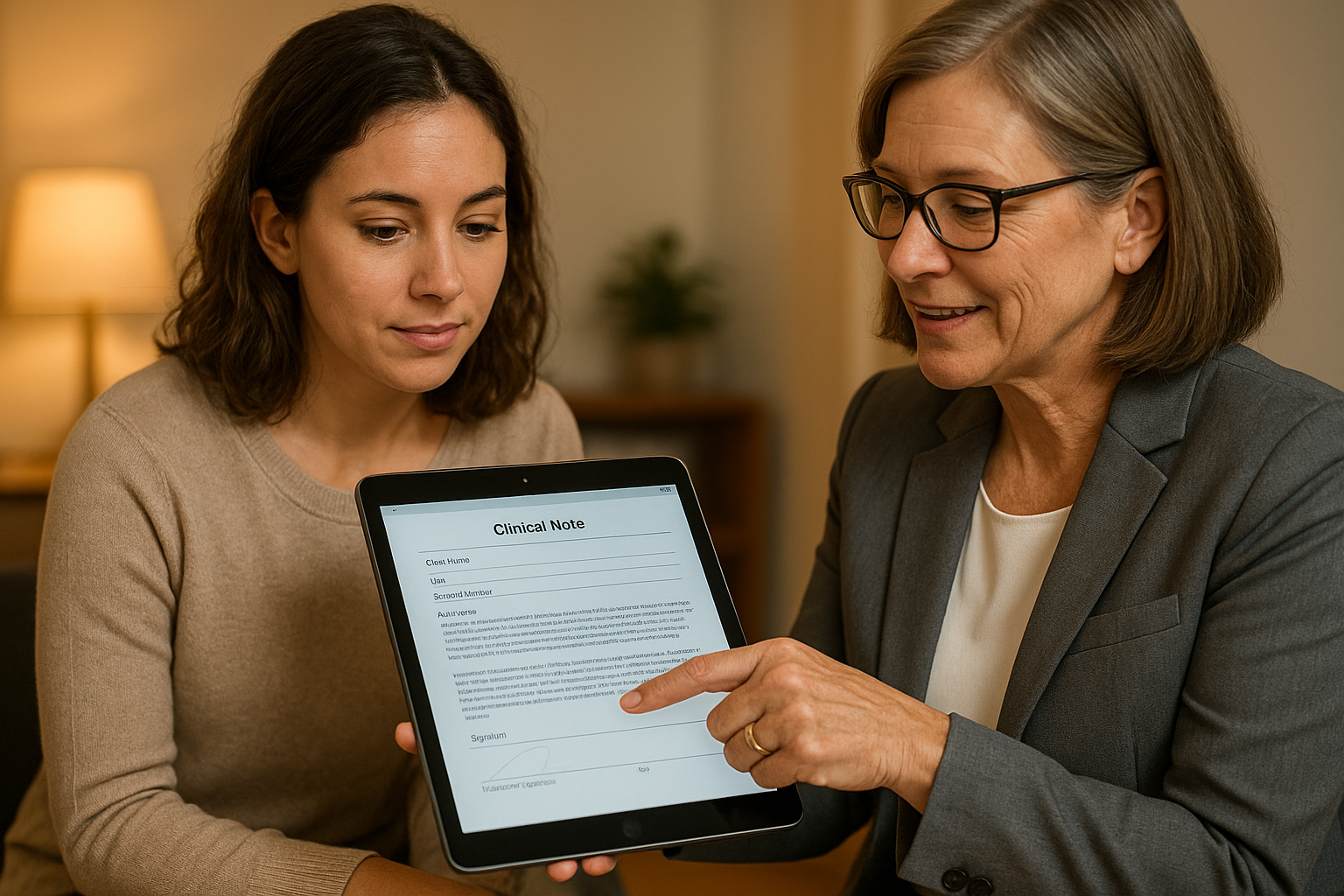
Co-signature workflows connect each supervision hour directly to the clinical note it supports.
Key Features of Supervision Hour Tracking Software
Not every tracking tool is built the same way. Specifically, the strongest supervision hour tracking software includes the following capabilities:
- Hour logging by session type, separating individual, group, and triadic supervision.
- Co-signature workflows that tie supervision directly to the clinical note being supervised.
- State rule mapping, since LPC, LMFT, and LCSW requirements vary significantly by board.
- Audit trails that preserve a timestamped history for licensure applications.
- Alerts for missing documentation, so gaps surface before they delay a license.
TuskaMind's supervision management tools cover hour tracking, note review and co-signature, and state-by-state hours tracking inside one platform, which also connects to scheduling and documentation rather than operating as a separate system. If you want to see how that connection works in practice, our post on integrating scheduling with clinical documentation explains the workflow in more detail.
How Supervision Hour Tracking Works: A Step-by-Step Process
Although every platform looks a little different, the underlying process for tracking supervision hours follows a consistent pattern. Here is how it typically works:
- Set up supervisee profiles. Create a profile for each prelicensed clinician that includes their license track, state board, and required hour totals so the system knows what to track from day one.
- Log each supervision session. Record every individual, group, or triadic supervision session as it happens, noting duration, format, and topics covered to keep the hour count accurate and current.
- Attach documentation and co-signatures. Link each supervision session to the related clinical note and route it for supervisor co-signature so the record is complete and audit ready.
- Monitor progress against state requirements. Compare accumulated hours against the specific state board rules for that clinician's license type to catch shortfalls before they delay licensure applications.
- Generate board-ready reports. Export a complete, chronological hour summary whenever a clinician needs to submit proof of supervision to their state licensing board.
Supervision Hour Tracking Software vs. Manual Spreadsheets
In contrast to dedicated software, spreadsheets require someone to manually update totals, cross-check state requirements, and remember to attach supporting notes. Similarly, when a supervisor leaves the practice, a spreadsheet-based record often leaves with them, creating a gap that is hard to reconstruct later.
Supervision hour tracking software, on the other hand, keeps the record inside the practice's own system. As a result, hours stay tied to the clinician rather than to one person's personal files, and compliance checks happen automatically rather than during a once-a-year scramble before a licensure deadline.
Choosing a Supervision Tracking Platform for Your Practice
When evaluating a supervision tracking platform, above all, look for one that connects supervision to the rest of your practice rather than operating in isolation. TuskaMind, for instance, was founded by Zina Ortiz, MA, LPC, a licensed professional counselor, clinical supervisor, and owner of a Colorado behavioral health group practice. The platform was developed and refined inside that live practice, which supported up to roughly 50 clinicians and contractors while processing approximately 70 to 100 insurance claims per day, so its supervision workflows were shaped by real operational pressure rather than theory alone.
Because supervision, documentation, and billing often need to work together, TuskaMind also ties supervisory billing directly to supervision records, which helps confirm that billed sessions under a supervising clinician's license have matching documentation. If you are also weighing documentation tools, our guide to treatment plan software for behavioral health practices covers how clinical documentation fits into the same system. You can also explore the broader platform directly at tuskamind.com or browse additional resources on the TuskaMind learning hub.
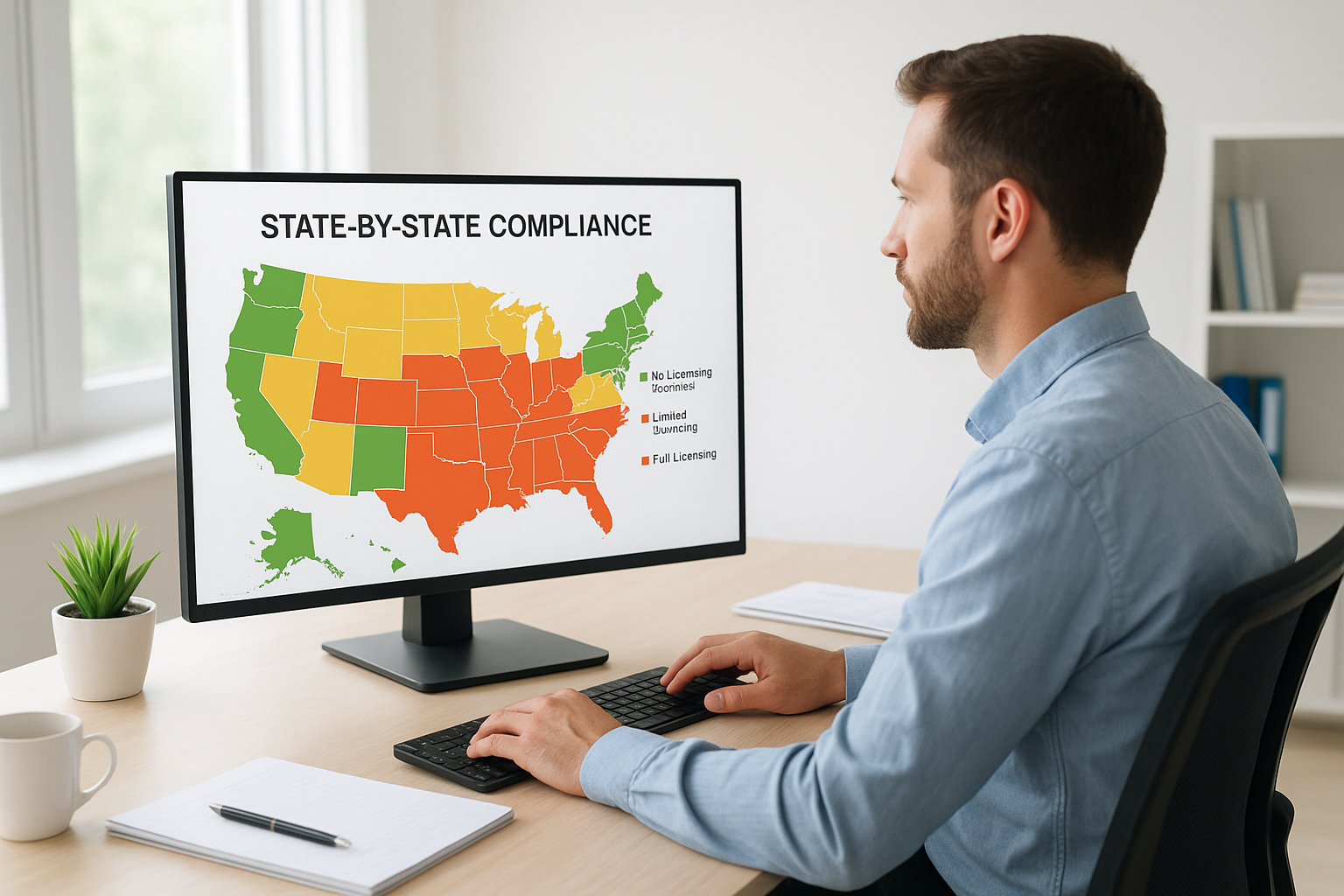
Mapping supervision requirements by state helps practices avoid last-minute licensure surprises.
Common Mistakes When Tracking Supervision Hours
Even well-intentioned practices run into avoidable problems. Specifically, these mistakes show up most often:
- Logging hours after the fact instead of in real time, which leads to gaps and guesswork.
- Mixing individual and group supervision categories, which can misrepresent progress toward licensure.
- Losing records entirely when a supervisor leaves the practice.
- Failing to map hours against state-specific board rules, which is the single biggest cause of licensure delays.
Therefore, the safest approach is to treat supervision documentation the same way you treat clinical notes: completed close to the session, reviewed promptly, and stored in a system built for audits, not convenience. For HIPAA-related documentation standards that apply to supervision records, the Health Insurance Portability and Accountability Act remains the baseline every behavioral health practice should understand.
Frequently Asked Questions About Supervision Hour Tracking Software
What is supervision hour tracking software?
Supervision hour tracking software is a digital system that logs supervised clinical hours, flags missing co-signatures, and maps progress against state board requirements. It replaces manual logs and spreadsheets with one auditable record practices can trust.
How does supervision hour tracking software work?
It works by recording each supervision session type, individual, group, or triadic, then linking that record to the supervisee's license track and required hour totals. As a result, supervisors and owners see real-time progress instead of reconstructing it later.
Why do behavioral health practices need supervision hour tracking software?
Practices need it because prelicensed clinicians cannot advance toward licensure without accurate, board-ready hour documentation. Without software, that tracking usually falls on spreadsheets that are easy to lose, misreport, or forget to update.
How is supervision hour tracking software different from a spreadsheet?
Unlike a spreadsheet, supervision hour tracking software connects hour logs directly to documentation, co-signatures, and billing records, so nothing has to be entered twice. In contrast, spreadsheets require manual updates and offer no built-in compliance checks.
How much does supervision hour tracking software cost?
Pricing varies widely depending on practice size, the number of supervisees, and whether the software is bundled with a full EHR. Some platforms, including TuskaMind, offer pilot programs with preferred pricing for practices that join early.
How long does it take to set up supervision hour tracking software?
Most practices can set up supervisee profiles and basic hour categories within a day or two. However, full onboarding, including historical hour migration and supervisor training, typically takes one to three weeks depending on practice size.
What are common mistakes practices make when tracking supervision hours?
Common mistakes include logging hours after the fact instead of in real time, mixing individual and group hour categories, and losing records when a supervisor leaves the practice. Above all, failing to tie hours to state-specific rules causes the most licensure delays.
What features should supervision hour tracking software include?
Look for hour logging by session type, co-signature workflows, state rule mapping, audit trails, and alerts for missing documentation. Additionally, integration with scheduling and billing prevents duplicate data entry.
Can supervision hour tracking software track state-specific licensing requirements?
Yes, quality platforms map supervision hours against each state's specific board rules, since requirements for LPC, LMFT, and LCSW licensure vary significantly by state. TuskaMind, for example, is built to track these requirements state by state, as explained in our post on tracking supervision hours by state.
Does supervision hour tracking software help with supervisory billing?
Yes, in practices that bill for services rendered by prelicensed clinicians under a supervisor's license, tracking software can connect supervision records directly to claims. This link helps confirm that billed sessions have matching supervision and co-signature documentation.
Who uses supervision hour tracking software?
Clinical supervisors, practice owners, administrators, and prelicensed clinicians themselves all use this type of software. In particular, group practices with multiple supervisees rely on it to avoid tracking hours manually across many individuals.
Is supervision hour tracking software only useful for large practices?
No, even solo supervisors with one or two supervisees benefit from accurate digital records. That said, the time savings and risk reduction grow substantially as a practice adds more prelicensed clinicians.
Key Takeaways
In summary, supervision hour tracking software turns a manual, error-prone process into a centralized, auditable system that protects both prelicensed clinicians and the practices that employ them. Rather than chasing spreadsheets or reconstructing hours before a licensure deadline, owners and supervisors can see progress in real time and catch gaps before they become a problem. Ultimately, a platform like TuskaMind, built from inside a real group practice, ties supervision to documentation and billing so supervision hour tracking software becomes one part of a connected practice rather than another disconnected tool to manage.