
A client portal for behavioral health practices is a secure, HIPAA-compliant online space where clients, and often their family members, book appointments, complete forms, message their care team, and view balances. For solo clinicians and growing group practices alike, this single login replaces phone tag, paper intake packets, and scattered email threads. As a result, a well-built client portal for behavioral health practices does more than digitize paperwork; it protects sensitive data, respects complex family relationships, and quietly reduces the administrative load pulling clinicians away from client care.
In short, the right portal gives clients and guardians self-service access to scheduling and billing while keeping protected health information locked behind appropriate permissions. Below, we break down what a behavioral health client portal actually does, which features matter most for insurance-based practices, and how to choose one without disrupting your current operations.
What Is a Client Portal for Behavioral Health Practices?
A client portal for behavioral health practices is the client-facing layer of a practice's software stack. It lets clients log in to schedule sessions, sign consent forms, pay balances, and send secure messages without calling the front desk. Unlike a general medical patient portal, it is built around therapy-specific needs: recurring sessions, telehealth links, and relationships between family members who may each need their own account.
Specifically, behavioral health group practices rely on portals that connect directly to scheduling, billing, and documentation. Otherwise, staff end up re-entering the same information in multiple systems, which creates errors and slows down claim submission.
Why Behavioral Health Group Practices Need a Secure Client Portal
Behavioral health data is some of the most sensitive information a practice handles, including diagnosis codes, treatment plans, and payment details. Consequently, a secure client portal matters more here than in many other healthcare settings. According to the U.S. Department of Health and Human Services, HIPAA requires administrative, physical, and technical safeguards around this kind of protected health information (HHS.gov), and an unsecured email or voicemail can easily violate those requirements.
Furthermore, as a practice grows past a handful of clinicians, manual oversight of client communication stops scaling. Owners cannot personally verify that every form was signed, every balance was communicated, or every family member only saw what they were authorized to see. A centralized portal takes that burden off individual staff members and puts consistent rules in place across the whole practice.
Relationship-Aware Access for Families, Couples, and Guardians
Therapy practices rarely deal with simple one-to-one client relationships. A minor's parent, a couple in joint therapy, or a guardian managing a dependent adult's care all need different levels of visibility. Therefore, a behavioral health client portal should support separate logins with distinct permission boundaries rather than one shared family account. For example, a parent might need to view scheduling and balances for a teenage client without accessing session notes, while a couple in joint therapy may each need private messaging with their counselor.
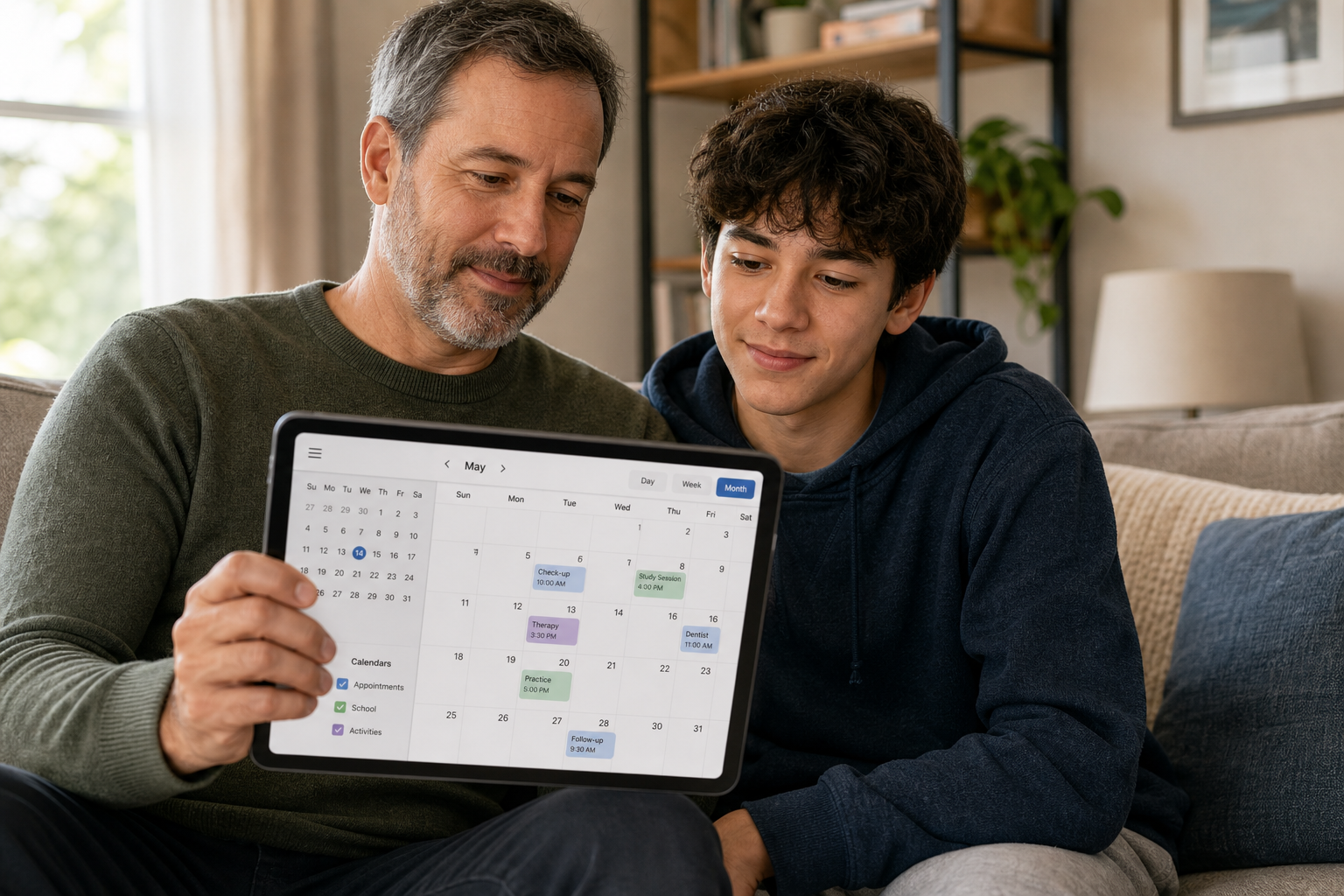
A relationship-aware client portal for behavioral health practices lets families manage scheduling without compromising privacy.
Key Features of a Behavioral Health Client Portal
Not every client portal is built the same way. In particular, insurance-based group practices should look for the following capabilities before committing to a platform:
- Secure messaging between clients and their care team, separate from personal email or text.
- HIPAA-compliant telehealth video built directly into the same login clients already use.
- Online bill pay with visibility into balances, copays, and payment history.
- Relationship-aware accounts for minors, couples, and guardians with defined permissions.
- Digital intake forms and consent documents tied directly to the client's chart.
- Integration with the practice's EHR, scheduling, and revenue cycle management tools.
In contrast, portals that operate as isolated, bolt-on tools tend to create duplicate data entry and missed updates between billing and clinical staff. That is why many practices eventually consolidate toward platforms where the portal, EHR, and billing share one database. You can review a broader feature checklist in this guide to picking the best EHR for your practice.
How a Client Portal Reduces No-Shows and Front-Office Work
Missed appointments are an expensive, ongoing problem in mental health care. Behavioral health practices commonly report no-show rates between 20% and 30%, noticeably higher than the roughly 10% average seen in general medical settings, based on industry data summarized by workforce and practice-management researchers. Above all, much of that gap comes down to friction: clients forget to call, cannot reach the front desk, or simply lose track of appointment times.
A client portal addresses this directly by letting clients confirm, reschedule, or cancel sessions themselves, often triggering automated reminders along the way. Similarly, front-office staff spend less time on repetitive phone calls and more time on tasks that actually require a human, such as resolving insurance issues or supporting clients in crisis.
Client Portal vs. General Patient Portal Software
The terms "client portal" and "patient portal" are often used interchangeably, but behavioral health practices need features that general medical patient portal software (as defined by HealthIT.gov) rarely includes. The table below compares the two at a glance.
| Capability | General Patient Portal | Behavioral Health Client Portal |
|---|---|---|
| Family/guardian access | Basic or none | Relationship-aware, permission-based |
| Telehealth for group/family sessions | Rare | Built in for individual, couples, and group formats |
| Insurance billing visibility | Limited | Tied to claims, balances, and payer status |
As a related concept, the broader idea of a patient portal has existed for years across healthcare, but behavioral health adds layers of nuance that generic platforms typically overlook.
How to Choose a Client Portal for Behavioral Health Practices
When evaluating a client portal for behavioral health practices, start with your practice's actual pain points rather than a generic feature list. For instance, a group practice employing prelicensed clinicians should confirm that supervisors can review and co-sign notes tied to the same client accounts clients use. You can read more about supervision-specific requirements in this clinical supervision management software guide.
Likewise, practices handling high claim volume should prioritize portals connected to billing and documentation, not standalone tools. This related insurance-based behavioral health software guide covers how portal, billing, and claims tools should work together.
5 Steps to Roll Out a Client Portal in Your Practice
Switching to a new client portal does not have to disrupt active caseloads. Instead, follow a structured rollout:
- Audit current communication gaps. Review how clients currently book appointments, sign forms, and message your team, then document where delays, missed messages, or security risks happen most often.
- Define family and guardian access rules. Map out which users need account access for minors, couples, or dependent adults, and decide what permissions each person should have before you configure the portal.
- Choose a HIPAA-compliant platform built for behavioral health. Select software designed for behavioral health workflows rather than general medical offices, since it should already support relationship-aware accounts, supervision notes, and insurance-based billing.
- Migrate forms, intake paperwork, and billing setup. Move your intake packets, consent forms, and payment methods into the new portal, and test the client-facing experience before announcing the change to your caseload.
- Train staff and launch with a communication plan. Walk clinicians and front-office staff through daily portal tasks, then send clients a short, friendly notice explaining what is changing and how to get help.

Staff training is a key step before a behavioral health client portal fully replaces manual communication.
Bringing Portal, Billing, and Documentation Together
Ultimately, a client portal works best as one connected piece of a larger operating system rather than a standalone tool. When scheduling, documentation, and billing already live in one place, portal activity like a signed form or a paid balance updates everything automatically instead of requiring manual re-entry. Platforms such as TuskaMind, built from the operations of a real Colorado behavioral health group practice, were designed around this exact need: a single system that shows owners and administrators what needs attention, instead of a filing cabinet that only stores what already happened.
For practices still comparing documentation tools alongside their portal decision, this progress notes software comparison and the full features overview are useful next steps.
Frequently Asked Questions
What is a client portal for behavioral health practices?
A client portal for behavioral health practices is a secure online account where clients and, where appropriate, family members can book appointments, complete forms, message their provider, and view balances. It replaces paper intake packets and phone-based scheduling with a HIPAA-compliant digital workspace.
How does a client portal for behavioral health practices protect client privacy?
It uses encrypted data storage, role-based access, and audit trails so only authorized users see protected health information. Separate permission levels for minors, guardians, and couples prevent one party from viewing another person's private notes or billing.
How much does a behavioral health client portal typically cost?
Pricing varies depending on whether the portal is a standalone add-on or bundled into a full EHR and billing platform. Most group practices find bundled platforms more cost-effective than paying separately for scheduling, telehealth, and portal tools.
How long does it take to set up a client portal for a therapy practice?
A straightforward rollout typically takes two to six weeks, depending on how much data needs migrating from spreadsheets or a legacy EHR. Practices that plan permission rules and staff training in advance usually launch faster.
Can family members and guardians access the same client portal account?
Yes, a well-designed portal allows relationship-aware access so guardians, parents of minors, or partners in couples therapy each have their own login with defined permissions. This keeps sensitive notes private while still allowing necessary coordination.
What is the difference between a client portal and a patient portal?
The terms are often used interchangeably, but a client portal built specifically for behavioral health adds features general medical patient portals lack, such as relationship-aware family accounts and supervision-related documentation visibility. A generic patient portal rarely accounts for therapy-specific workflows.
Why do insurance-based practices need secure client portals?
Insurance-based practices handle sensitive diagnosis codes, claim details, and balances that require strict HIPAA safeguards. A secure portal reduces the risk of exposing this information through unsecured email or phone calls while improving payment collection.
What common mistakes do practices make when rolling out a client portal?
Common mistakes include skipping staff training, failing to define family access rules before launch, and choosing software not built for behavioral health workflows. These gaps often lead to confusion, support tickets, and low client adoption.
Can clients pay their balances directly through a client portal?
Yes, most modern portals include online payment processing so clients can view balances and pay copays or outstanding fees without calling the office. This reduces aging accounts receivable and administrative follow-up.
Does a client portal replace an EHR?
No, a client portal is one component of a larger system. It works best when connected to an EHR, scheduling, and billing platform so client-facing actions automatically update clinical and financial records.
What features should a behavioral health group practice look for in a client portal?
Look for relationship-aware family accounts, HIPAA-compliant telehealth, secure messaging, online payments, and integration with scheduling and billing. Practices with prelicensed clinicians should also confirm the portal supports supervision-related documentation.
Is a client portal required for HIPAA compliance?
A client portal is not legally required, but it makes HIPAA compliance easier by replacing unsecured email and phone communication with encrypted, access-controlled channels. Practices still need a signed Business Associate Agreement with their software vendor.
How does a client portal help with supervision of prelicensed clinicians?
When a portal is connected to supervision tools, supervisors can review notes, track hours, and confirm co-signatures without chasing paperwork across separate systems. This keeps board-ready supervision records organized alongside client-facing activity.

Group practice staff coordinating client accounts through a shared, secure client portal.
Final Thoughts on Behavioral Health Client Portals
In the end, choosing the right client portal for behavioral health practices comes down to fit: it needs to respect family relationships, protect sensitive data, and connect directly to scheduling, documentation, and billing rather than operating as an isolated tool. Consequently, practices that treat the portal as part of one unified system, rather than a bolted-on extra, tend to see fewer missed payments, fewer no-shows, and less administrative strain on staff. As group practices continue to grow past what spreadsheets and disconnected software can handle, a well-integrated client portal becomes less of a convenience and more of an operational necessity.

