
Behavioral health electronic health records are the foundation of how mental health and substance use treatment practices document care, track progress, and stay compliant with payer and licensing requirements. However, most systems on the market were built for general medicine first and adapted for behavioral health later, leaving gaps in supervision tracking, treatment planning, and insurance-specific billing workflows. As a result, growing practices often end up stitching together an EHR, a billing tool, a spreadsheet for supervision hours, and a separate telehealth platform. This guide breaks down what behavioral health electronic health records should actually do, the risks of settling for generic software, and a practical framework for evaluating platforms built specifically for behavioral health operations.
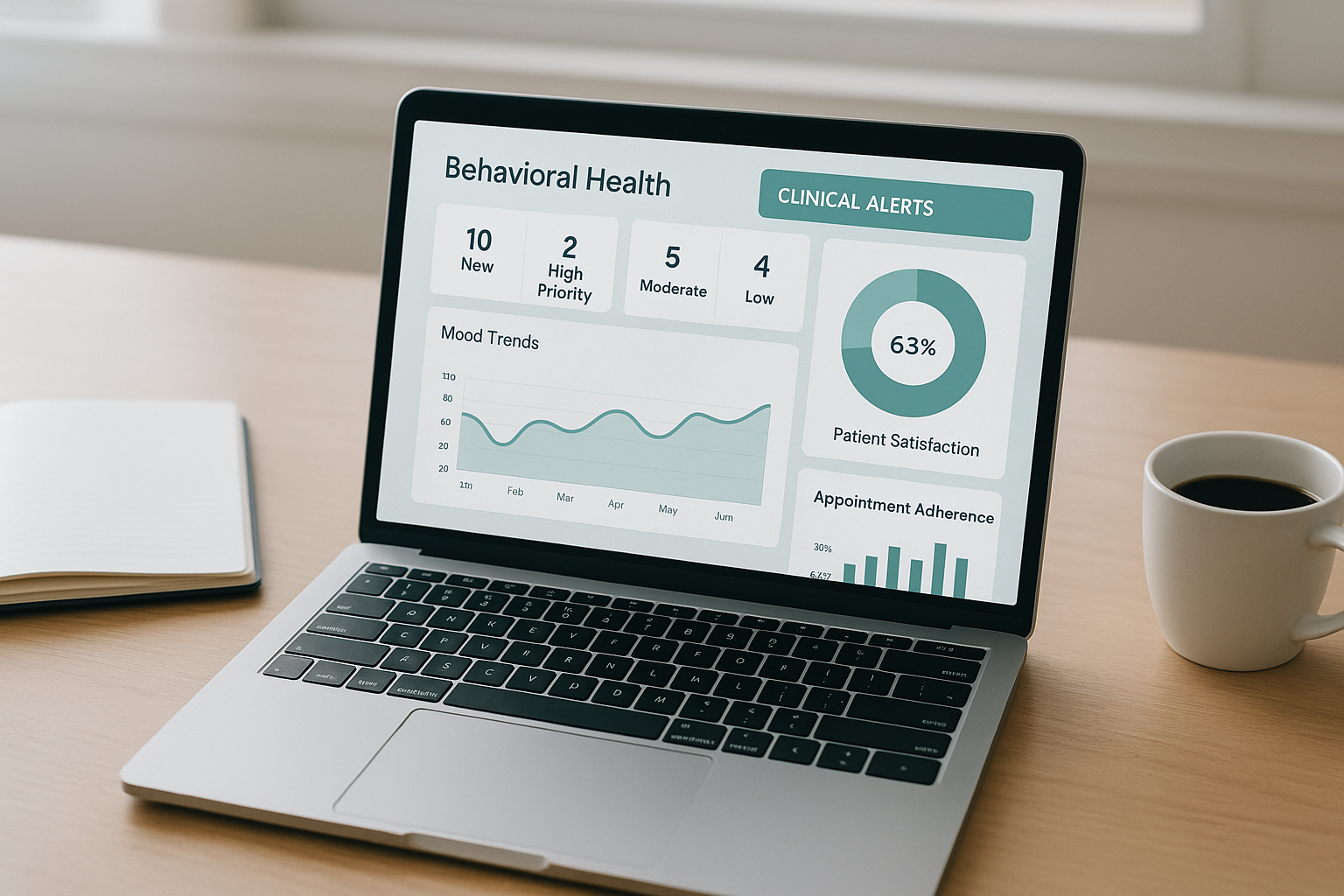
A unified view of behavioral health electronic health records helps owners see what needs attention before it becomes a billing problem.
What Are Behavioral Health Electronic Health Records?
Behavioral health electronic health records are digital systems designed to document, store, and manage clinical information specific to mental health and substance use treatment, including therapy notes, treatment plans, risk assessments, and supervision records. Unlike general medical records, they must account for licensure supervision, session-based billing codes, and the longitudinal, sensitive nature of psychotherapy documentation.
According to the Office of the National Coordinator for Health Information Technology, a federal agency within HHS, an electronic health record is a digital version of a patient's chart designed to be shared across authorized providers. In behavioral health, however, that chart also needs to capture things a cardiology or primary care record never will: progress notes tied to 45-minute therapy codes, co-signature requirements for supervisees, and documentation that satisfies both payers and state licensing boards. For example, SAMHSA's National Survey on Drug Use and Health found that more than 57 million U.S. adults experienced a mental illness in a single year, which underscores how much documentation volume behavioral health practices manage daily. For a broader technical definition, see Wikipedia's overview of electronic health records.
Why Generic EHR Systems Fall Short for Behavioral Health Practices
Generic EHR systems are typically built around medical exam workflows, vital signs, and prescription management, not around therapy notes, supervision chains, or session-based insurance billing. Consequently, behavioral health practices often find themselves forcing documentation into a round template, or exporting data into spreadsheets just to track supervision hours. In contrast, a platform built for behavioral health treats supervision, clinical documentation, and revenue cycle management as connected parts of the same workflow rather than separate add-ons.
For instance, when a prelicensed clinician's note is incomplete, a specialty-built system flags it before it blocks billing, instead of letting the claim sit untouched for weeks. Above all, fragmentation costs practices time and revenue, since staff spend hours each week reconciling information across disconnected tools instead of focusing on client care.
Core Features Every Behavioral Health EHR Should Include
A capable behavioral health EHR needs to go beyond basic charting. Specifically, practice owners should look for the following when comparing platforms:
- Structured clinical documentation, including SOAP notes, treatment plans, and progress notes linked directly to billing codes.
- Supervision management, including hour tracking, note co-signature, and board-ready supervision records for prelicensed clinicians.
- Revenue cycle management, including claim submission, denial handling, ERA reconciliation, and aging accounts receivable in one workflow.
- HIPAA-compliant telehealth for individual, couples, family, and group sessions.
- Real-time alerts covering unsigned notes, expired insurance, and aging balances before they become revenue problems.
- Embedded AI assistance, such as TuskaMind's Nellie AI, which drafts notes, suggests CPT codes, and flags missing fields without replacing clinical judgment.
Therefore, evaluating software against this list, rather than a generic EHR checklist, helps practices avoid a costly mid-contract switch later on.

Supervision tracking built into behavioral health records keeps prelicensed clinicians on schedule for licensure.
How Behavioral Health Records Strengthen Supervision and Compliance
Behavioral health records play a direct role in supervision compliance, especially for practices employing prelicensed clinicians working toward licensure. Each state board sets its own requirements for supervised hours, co-signed notes, and documentation audits, and falling behind can delay a clinician's licensure timeline. In addition, insurance payers increasingly request documentation proof during audits, which means incomplete or unsigned records can trigger clawbacks on previously paid claims.
A platform that tracks supervision hours state-by-state, flags notes awaiting co-signature, and keeps an audit trail reduces this risk considerably. Similarly, centralizing these records with billing data means a biller can see immediately why a claim is stuck, rather than guessing or chasing a supervisor by email. For more on how data protection fits into this picture, review TuskaMind's security practices.
Step-by-Step: How to Evaluate a Behavioral Health EHR Platform
Choosing new software is a significant commitment, so a structured evaluation process helps avoid an expensive mistake. Follow these five steps before signing a contract:
- Map your practice's core workflows across documentation, scheduling, billing, and supervision, then list where current tools create bottlenecks or require manual double-entry between separate systems.
- Confirm the platform supports behavioral-health-specific documentation like SOAP notes, treatment plans, and the supervision hour tracking required for prelicensed clinicians in your state.
- Test the revenue cycle management workflow directly, including claim submission, denial handling, and ERA reconciliation, since billing problems quietly drain more revenue than most owners realize.
- Review security and compliance documentation, including HIPAA safeguards, business associate agreements, and audit trail capabilities, before trusting the platform with protected health information.
- Request a pilot period or onboarding walkthrough so your clinical and administrative staff can validate real daily workflows before committing practice-wide.
Where TuskaMind Fits Into the Picture
TuskaMind was built from inside a live behavioral health group practice supporting roughly 50 clinicians and contractors and processing 70 to 100 insurance claims per day. As a result, its behavioral health electronic health records module was shaped by real operational pain points rather than theoretical requirements. Founder Zina Ortiz, MA, LPC, a licensed professional counselor and clinical supervisor, designed the platform to connect documentation, supervision, revenue cycle management, and real-time alerts in a single system, viewable at tuskamind.com.
For practices exploring a switch, the features overview outlines clinical documentation, scheduling, and the embedded AI assistant in more detail, while the Pilot Partner Program offers early access and hands-on onboarding for practices ready to move off fragmented tools. Practices with questions about data handling can also review the privacy policy before migrating client records.

Connecting billing directly to behavioral health electronic health records reduces the time staff spend chasing claim status.
Frequently Asked Questions About Behavioral Health Electronic Health Records
What are behavioral health electronic health records?
Behavioral health electronic health records are digital systems that store therapy notes, treatment plans, supervision records, and billing information specific to mental health and substance use care. They differ from general medical records because they must support session-based billing, co-signature workflows, and licensure supervision tracking.
How do behavioral health EHRs differ from general medical EHR systems?
General medical EHRs focus on exam findings, vital signs, and prescriptions, while behavioral health EHRs center on therapy notes, treatment plans, and supervision hour tracking for prelicensed clinicians. Behavioral health platforms also integrate session-based CPT codes and payer rules unique to mental health billing.
Why do behavioral health practices need specialized EHR software?
Specialized software reduces the manual work of forcing therapy documentation and supervision tracking into templates built for primary care. As a result, practices spend less time reconciling data across disconnected tools and more time on client care and revenue.
How much does a behavioral health EHR system typically cost?
Pricing varies widely based on practice size, the number of clinicians, and whether revenue cycle management services are included. Most platforms charge per-provider monthly fees, with additional costs for billing services, telehealth, or premium support tiers.
How long does it take to implement a behavioral health EHR?
Implementation timelines typically range from a few weeks for small solo practices to a few months for larger group practices migrating historical records and training staff. Practices using white-glove onboarding and migration support generally move faster than those self-implementing.
What features should a behavioral health EHR include?
At minimum, look for structured clinical documentation, supervision management, revenue cycle management, HIPAA-compliant telehealth, and real-time practice alerts. Embedded AI tools for note drafting and CPT code suggestions are increasingly valuable additions.
Can behavioral health EHRs track supervision for prelicensed clinicians?
Yes, specialty-built platforms can track supervised hours state-by-state, require co-signatures on notes, and maintain board-ready supervision records. This is one of the clearest differences between generic EHRs and behavioral health specific systems.
What common mistakes do practices make when choosing an EHR?
A common mistake is selecting software based on price alone without testing the billing and supervision workflows a practice actually uses daily. Another is underestimating how much time staff lose reconciling data across separate billing, documentation, and scheduling tools.
Are behavioral health electronic health records HIPAA compliant?
Reputable behavioral health electronic health records platforms are built on HIPAA and HITECH-compliant architecture, including business associate agreements, audit trails, and encrypted data storage. Practices should always confirm a vendor's specific compliance documentation before signing a contract.
How do behavioral health EHRs support insurance billing?
Many platforms include full revenue cycle management features such as claim submission, denial tracking, ERA reconciliation, and aging accounts receivable reports. This keeps billing visibility inside the same system as clinical documentation instead of a separate tool.
Can solo practitioners use behavioral health EHR platforms, or only group practices?
Solo clinicians can use behavioral health EHR platforms just as effectively as group practices, though supervision and multi-clinician dashboard features matter most for growing teams. Many platforms scale pricing and features based on the number of providers.
What is the difference between an EHR and a practice management system in behavioral health?
An EHR focuses on clinical documentation such as notes and treatment plans, while a practice management system typically handles scheduling, billing, and administrative tasks. Many modern behavioral health platforms combine both functions into a single system to avoid double data entry.
Conclusion
In summary, behavioral health electronic health records should do more than store what already happened in a practice. The best systems surface unsigned notes, expiring insurance, aging balances, and supervision gaps before they turn into denied claims or compliance problems. Therefore, practices evaluating new software should prioritize platforms built specifically for behavioral health workflows rather than general medical systems adapted after the fact. Whether a practice is a solo clinician or a growing group handling dozens of claims daily, choosing the right behavioral health electronic health records platform, such as TuskaMind, can be the difference between reactive firefighting and proactive, scalable operations.